
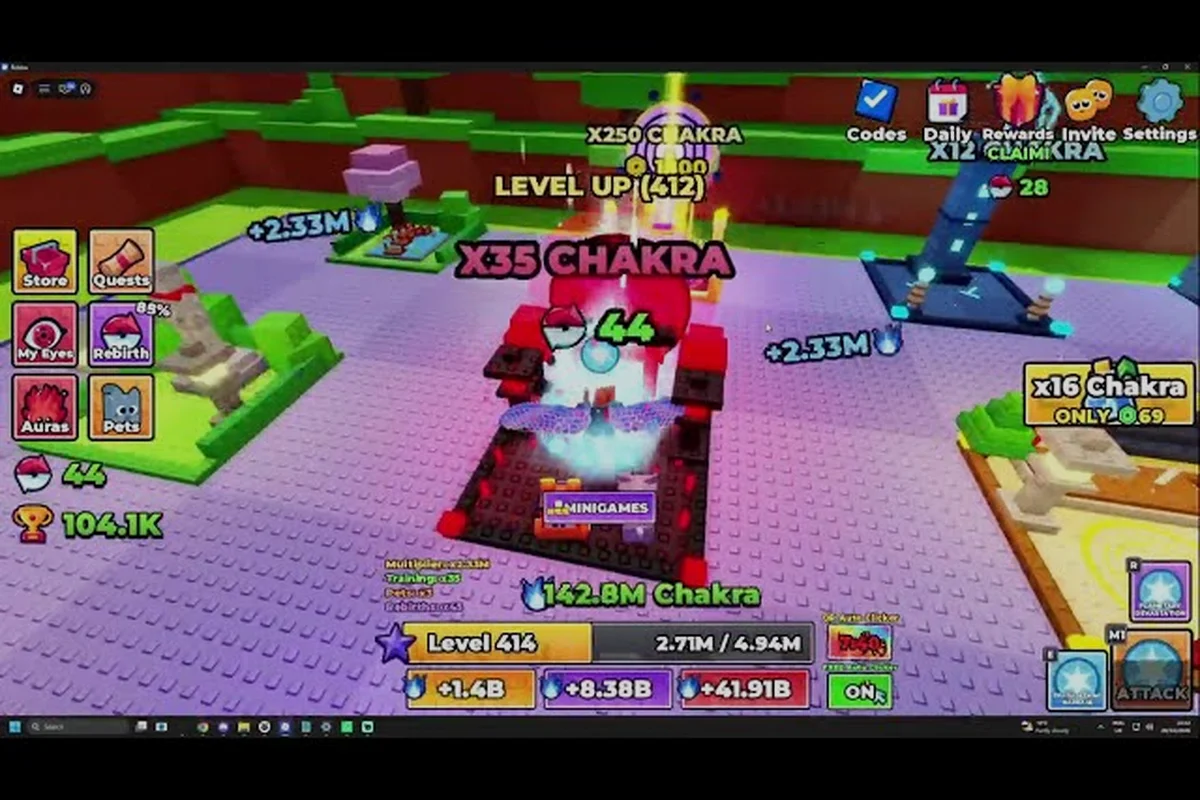
This 1 anime eyes eye comparison starts with a limitation that most ranking pages skip: the game does not publish an eye stat table, a damage formula, an effect category, or an official tier order. What it does publish is a count of 14 eyes, and what community footage adds is a set of seven sourced names plus two acquisition routes. A useful comparison has to be built from those facts instead of from invented categories.
The result is a different kind of guide. Instead of ranking eyes by "low-health burst" or "drop bonus," this page compares them by name confidence, unlock route, reported ability evidence, and how to test the eye on your own account. Those are the dimensions a player can actually verify.
The Four Dimensions a Real Eye Comparison Can Use
An eye comparison is only as good as its inputs. Four dimensions survive a source check. The first is whether the name appears in the official description or in community footage. The second is whether the eye is bought with Chakra or exchanged with Trophies. The third is whether any ability is reported by name, which is true only for Mangekyou Sharingan in the current record. The fourth is the live price shown in your own menu.
Everything else — damage coefficients, activation chances, trigger conditions, and bonus categories — is either unpublished or contradicted by the confirmed acquisition routes. A comparison that includes those rows is not comparing the game; it is comparing a template borrowed from other anime titles.
| Comparison dimension | What can be verified | What cannot |
|---|---|---|
| Name | Official description and community footage | The seven unpublished names |
| Unlock route | Chakra shop or Trophy exchange | A per-world eye pool |
| Reported ability | Mangekyou Sharingan has named reports | Damage values or activation rates |
| Price | Live menu at the time you check | A permanent global price list |
| Performance | Your own before-and-after stage test | An official tier order |
Why There Is No Official "Best Eye"
The phrase 1 anime eyes best eye for bosses assumes a shared damage model that the game does not publish. Even if two players own the same eye, their results can differ because of their training area, pet multiplier, aura multiplier, sword tier, and rebirth multiplier. A ranking that ignores those inputs is a ranking of the reviewer's account, not of the eye.
The same applies to the 1 anime eyes best eye for farming question. Farming value depends on clear speed, reliability, and the currency you are trying to earn. An eye that helps one player finish a stage may be neutral for another whose bottleneck is Chakra income rather than combat.
That does not make comparison useless. It means the comparison should end with a test you run, not a verdict you copy from a video or a ranking page that cannot see your pet, aura, sword, and rebirth multiplier. The test is the part of the comparison that belongs to your account.
The Seven Names and Their Source Confidence
The official count is 14 eyes, but only seven names can be tied to a reliable source. The full eyes list labels the evidence for each name, while the table below compares the same names by unlock route and source confidence without assigning a strength rank to any row.
| Eye | Evidence behind the name | Reported unlock context | Confidence |
|---|---|---|---|
| Sharingan / Uchiha Eye | Official description plus community footage | Early eye; the starter reference point | High |
| Rasengan Eyes | Single community video description | Named in the eye discussion | Low to medium |
| Mangekyou Sharingan | Two community videos | Reported ability set; shop footage | Medium |
| Rinnegan | Official page plus video captions | High-theme eye discussed in late-game coverage | Medium |
| Rinne Sharingan | Single community video | Late-theme eye; fewer sources | Low to medium |
| Six Eyes | Official page plus community footage | Appears among Trophy-priced eyes | Medium |
| Six Paths Sage | Two community videos | Discussed as a Chakra-shop eye | Medium |
Two cautions follow from the table. First, Sharingan and Uchiha Eye are treated together because community footage uses both labels for the early eye; that does not prove they are separate collectibles. Second, the confidence column describes the name evidence, not the eye's power. A low-confidence row is not weak; it is simply less documented.
The other seven names in the official count have not been published. A comparison page that lists them without a source is filling a gap with guesses. If your menu shows a name that is not in this table, that is useful information: record it and compare its live listing rather than trusting a copied list.
Late-Game Eyes Without a Late-Game Tier
Searches for 1 anime eyes late game eyes usually expect a clear ranking of the strongest late unlocks. The source record does not provide one. What it provides is a set of names that community coverage discusses in later progression, plus a 500-Trophy price point whose attached eye is unconfirmed.
That makes "late game" a description of when players discuss the eye, not a verified power tier. A player should treat late-game labels as scheduling hints: these are eyes that may cost more or appear later in coverage, so they should be planned as longer-term purchases rather than impulse buys.
Unlock Routes: Chakra Shop Versus Trophy Exchange
The two confirmed routes behave differently, and that difference matters more than any speculative power ranking. Chakra is earned continuously through clicking, training, pets, auras, and offline gains, so a shop eye has a steady saving plan. Trophies are earned from stage clears, so a Trophy eye depends on your clear speed and reliability; the trophy farming guide covers the earning side.
| Route | Currency source | Planning advantage | Planning risk |
|---|---|---|---|
| Chakra eye shop | Clicking, training, pet and aura multipliers, offline gains | Price is visible in the shop; income grows with training | Competes directly with training-area spending |
| Trophy exchange | Stage clear rewards | Progress also produces Wins for swords and auras | Slow or unreliable clears make the target feel distant |
| Community-reported tiers | 50 / 150 / 500 Trophies | Gives a rough budget ladder | The eye at each tier is not confirmed |
Community footage shows the 50 / 150 / 500 Trophy price points, but it does not map a specific eye to a specific tier. It also does not confirm a per-world eye collection. Any guide that says "World 1 gives this eye, World 2 gives that eye" is adding a structure the sources do not contain.
The practical comparison is therefore a budget comparison. Ask which route your account can complete sooner and which purchase is more likely to fix your current bottleneck. If your clears are reliable, the Trophy route may be realistic. If your Chakra income is stable but your clears are slow, a shop eye may be the better test. If neither is stable, the training area comes first.
Why Archived Prices Age Quickly
The 1 anime eyes eye unlock cost is not a global constant in the sources. Community videos show prices at a moment in time, and the game was updated during its launch period. The responsible method is to open the shop and the exchange, read the current numbers, and compare them with your own session income.
A price is only meaningful when it is paired with a rate. If an eye costs a large amount of Chakra and your training area produces a small amount per hour, the eye is not "expensive" in the abstract; it is expensive for your account right now. Record both numbers before deciding.
Reported Abilities: Only One Eye Has Named Evidence
The 1 anime eyes anime eye powers question is where fabrication enters most often. The current record supports one specific claim: community coverage associates Mangekyou Sharingan with Kamui, Amaterasu, and Susanoo. Those are reported abilities attached to one named eye.
The record does not support a general taxonomy such as "eyes that trigger at low health," "eyes that increase drops," "eyes that activate for a limited time," or "eyes powered by Chakra." Those categories appear in generic anime-game guides, not in the sources for this game. They also conflict with the confirmed acquisition model, which treats eyes as purchases rather than as loot with random effects.
| Reported term | What the source supports | What to avoid claiming |
|---|---|---|
| Kamui | Reported ability of Mangekyou Sharingan | That it is a separate eye or a shop item |
| Amaterasu | Reported ability of Mangekyou Sharingan | A damage number or activation rate |
| Susanoo | Reported ability of Mangekyou Sharingan | A defensive stat or duration |
| Rasenshuriken | Community-narrated technique | That it has a confirmed eye entry |
| Tailed Beast Bomb | Community-narrated technique | That it is an eye or a confirmed unlock |
Rasenshuriken and Tailed Beast Bomb are community terms without a confirmed eye entry. They should not be compared as if they were purchasable eyes. Doing so inflates the list and misleads a player who is trying to budget for a real listing.
For the other six sourced names, the honest comparison is the theme and context in which the name appears, followed by a check of the live listing. If the menu shows an ability description, that description is the best available evidence for your account. If it does not, no external page can supply one.
What "Anime Eye Powers" Means in This Game
In practice, the phrase describes the reported ability set attached to a named eye. It does not describe a universal damage type, an official power class, or a combat role. Players who want to compare powers should compare reported names and menu descriptions, then test the eye on the same content.
This is a narrower answer than most search results provide, but it is the only answer that survives a source check. A comparison built on named reports is useful; a comparison built on invented categories is not, even when the invented version sounds more decisive.
How to Test an Eye on Your Own Account
Because the game does not publish stat tables, the only reliable comparison is a controlled test. The method is simple and does not require any external tool, but it does require keeping the rest of your setup fixed so the eye is the only variable.
-
Choose one stage you can clear consistently. A stage you sometimes fail will add noise to the result.
-
Record the baseline. Note the clear time, whether you finished without a failed attempt, and the Chakra and Trophies earned.
-
Change one thing. Equip the new eye and keep the same pet, aura, sword, and training state.
-
Repeat the same stage. Use the same route and the same number of attempts.
-
Compare the same three outputs. Clear reliability, time, and currency earned. Do not compare a single lucky run with a single unlucky one.
-
Decide with a margin. If the difference is small, the eye may be neutral for this content. Test one harder stage before calling it a failure.
| Test result | Reasonable conclusion | Next action |
|---|---|---|
| Faster and equally reliable | The eye fits this route | Keep it and record the result |
| Same speed, more reliable | The eye reduced failure risk | Keep it for this stage |
| Slower or less reliable | The eye does not fit this route | Switch back and test elsewhere |
| No measurable change | The stage is too easy to show a difference | Test a harder stage or keep saving |
Compare With the Rest of the Build
An eye is one part of a setup that also includes a pet, an aura, a sword, and the current rebirth multiplier. A comparison that ignores those parts can attribute a pet's Chakra multiplier or a sword's clear speed to the eye. Keep the rest of the build fixed during the test so the result belongs to the eye.
This is also why a community showcase cannot settle the question for your account. The creator's pet, aura, sword, and rebirth count may differ from yours. The showcase can tell you what the eye looks like and what the menu says; it cannot tell you how the eye will perform in your setup.
A Buying Decision Framework
A good decision framework starts with your bottleneck, not with a tier list. The table below maps common situations to a reasonable first move. It does not claim an official ranking, and it assumes the live menu is the final authority on price and availability.
| Your situation | Reasonable first move | Why |
|---|---|---|
| New account with the starter eye | Keep the starter eye; build Chakra income | A stable income makes every later comparison cheaper |
| Reliable clears, low Chakra | Improve the training area before buying an eye | Income growth compounds |
| Slow clears, stable Chakra | Test one affordable shop eye | A clear-speed gain protects your Trophy income |
| Trophy total near a reported tier | Check the exchange listing and the Ore alternative | The eye at that tier is unconfirmed until you look |
| Own several named eyes | Test them on the same stage with one variable | Personal results beat copied rankings |
| Chasing a "late game" eye | Set a budget target and recheck after updates | Late labels are scheduling hints, not power proof |
The framework also answers the best eye for bosses and best eye for farming questions in a usable way. For boss content, compare reliability and whether the eye helps you finish the encounter you actually repeat. For farming, compare the currency earned per session and whether the eye keeps your clears consistent. Neither answer requires an invented effect category.
What to Do With a Neutral Result
A neutral test is not a failure. It may mean the stage is too easy, the eye's reported ability fits a different context, or the rest of your build is already handling the bottleneck. Record the result, keep the eye owned, and revisit it after a training-area or sword upgrade changes your baseline.
The opposite mistake is assuming a purchase must be good because it was expensive. Price reflects the exchange's design, not a published performance guarantee. A tested neutral result is more valuable than an untested assumption, and it gives you a baseline for the next comparison.
Frequently Asked Questions
Which eye is best for bosses in +1 Anime Eyes?
No official ranking exists. The useful approach is to test candidates on the boss or stage you actually repeat, keeping the pet, aura, and sword fixed. Compare clear reliability first, then time. A community "best" claim without a source and a personal test is not a comparison.
Is there an official eye tier list?
No. The developer publishes a count of 14 eyes but no ranking, stat table, or official order. Community videos discuss strong eyes, but they do not provide a developer tier list. Treat any tier list that includes unpublished names or invented effect categories as unverified.
How much does each eye cost?
Prices are shown in the live Chakra eye shop and the Trophy exchange. Community footage shows 50, 150, and 500 Trophy price points but does not confirm which eye sits at each tier. Check the current menu, because prices and listings can change between updates.
Are Kamui, Amaterasu, and Susanoo separate eyes?
No sourced evidence treats them as separate eyes. Community coverage associates them with Mangekyou Sharingan as reported abilities. Rasenshuriken and Tailed Beast Bomb are community-narrated techniques with no confirmed eye entry, so they should not be compared as purchasable eyes.
What should I compare first, Chakra cost or Trophy cost?
Compare the route your account can complete sooner. Chakra comes from clicking and training and competes with training-area spending. Trophies come from stage clears and compete with Ores and other exchanges. Pick the route that matches your current bottleneck, then verify the live price before spending.